Entertainment & OTT
Redesign the controls and functions on the TV video player.
Increase user engagement. Enhance the user experience and usability of the TV player and offer minimalistic designs that will allow users to have a seamless experience. Redesigning the controls and functionalities of the player, so that customers are happy using the TV player.
Client
Viacom 18, Voot
Timeline
3 Months
Role
Product Designer
Existing Player Design Issues




Player Benchmarking


TV Interactions
Traditionally, the TV remote is the main way to interact with the TV.
However, voice-over commands and any connected touch device, such as a mobile, smartwatch, can also be used to replace the TV remote.
D-Pad Left, Right, Up & Down Arrows
and center OK button for selection
as well as special buttons like Play, Pause, Rewind and Forward are critical for player interaction.

Remote Hardware Behaviour Benchmarking

Analysis
Revamping the player design
TV Remote Control Behaviour
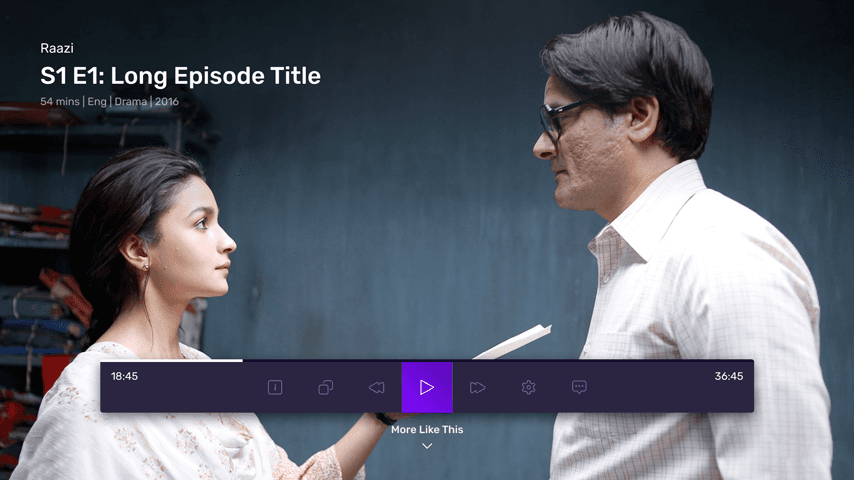
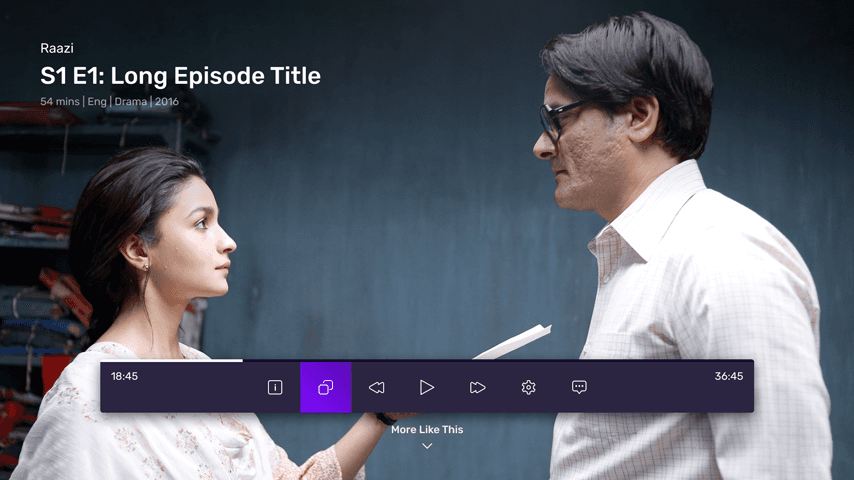
Using the Up and Down arrows on the TV remote control will allow the user to view the player controls, and multiple presses will navigate between the controls
Using the Right and Left arrows will allow the user to respectively Forward and Rewind the video content by 10 sec
The auto scrubbing will start when the Right arrow and Left arrow are long-pressed and the speed will be controlled by the same arrows
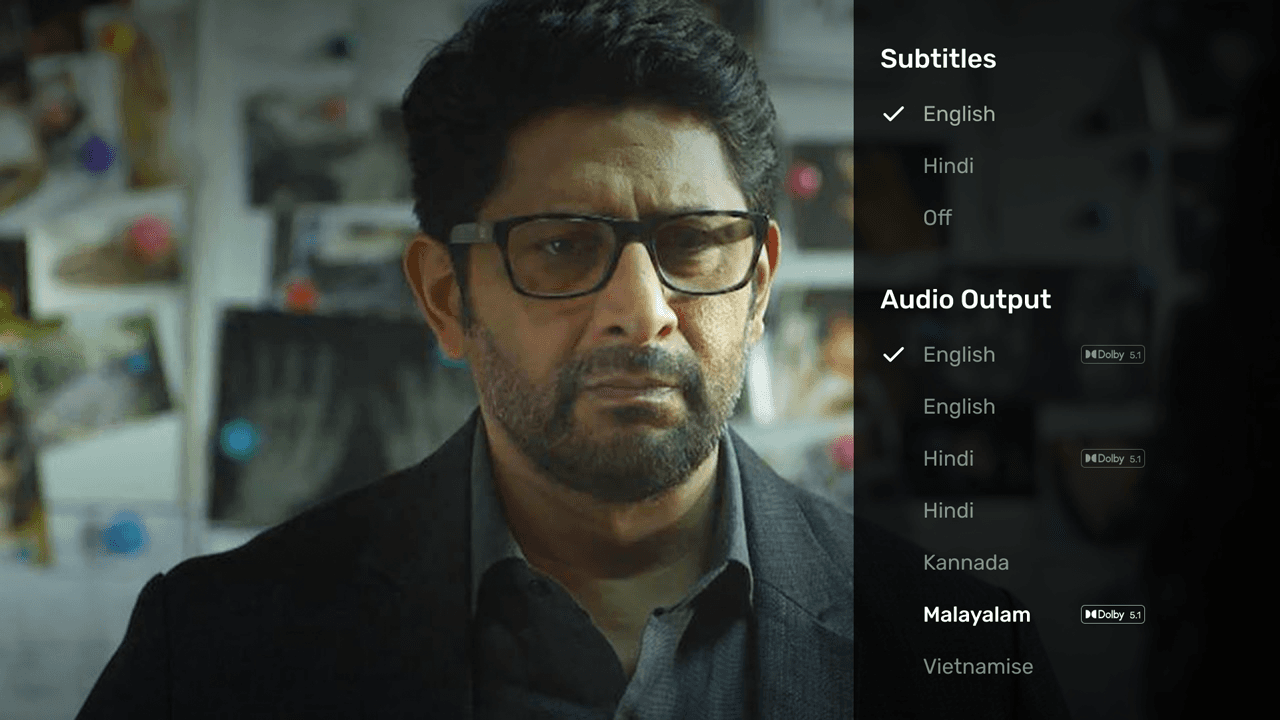
User Interface




Usability Testing
User Testing was conducted for the TV player by the team on 10 participants. Prototypes were created and controls on the remote were assigned to keys on
the keyboard for the user to navigate.
Results
After the study, the data collected at different stages (screening, interview, testing) was combined and analyzed.
The New Functionalities, features and controls were easy to understand and use. Users were able to navigate and perform the given tasks efficiently. As a result, users were able to quickly adapt to new designs.
The trend that stuck out was that the icons were not easily understood by the participants. This could be a result of the iconography itself, and/or the placement of the icons.
The scrubbing behavior of the participants was as expected, and thus a successful validation.
Next Steps
Exploration on the placement and use of icons will be undertaken.
Also, a separate study on iconography is in the works.